Tue Jun 03 02:33:22 PM +08 2025#42

https://en.wikipedia.org/wiki/Sales_(band)

Tue Jun 03 12:48:26 PM +08 2025#41

Functional programming allows a programmer to express ideas in an inherently mathematical way. This makes FP great for things like mathematical proofs, or great for people with a mathematical background who struggle to think like a programmer. It also simplifies code - if I'm reading a function with zero side-effects, or zero mutation of some data structure, then I can very clearly see the input, transformation and output. This style of function should be prioritised where appropriate, even in a procedural language like C. Reducing cognitive load for a programmer is clearly a bonus.

Tue Jun 03 11:57:53 AM +08 2025#40

The difference may not seem drastic, but the compounding performance returns will be vital in applications like simulations, games, and real-time systems where each CPU cycle is gold-dust, and each cache miss a deterrent to having a great product. So, in a well-written program, an engineer may make use of SoA for field-wise operations, and AoS for entity-wise operations.

Mon Jun 02 10:30:25 AM +08 2025#39

Feeling stronger

Fri May 30 03:14:46 PM +08 2025#38

$ python benchpop.py Size: 1000 - With: 0.0015s, 10318 comps | Without: 0.0018s, 16850 comps Size: 2000 - With: 0.0048s, 22672 comps | Without: 0.0042s, 37745 comps Size: 5000 - With: 0.0110s, 63319 comps | Without: 0.0120s, 107652 comps Size: 10000 - With: 0.0206s, 136634 comps | Without: 0.0276s, 235294 comps Size: 20000 - With: 0.0454s, 293288 comps | Without: 0.0583s, 510657 comps Oh, there it is. 🙄

Fri May 30 03:07:39 PM +08 2025#37

$ python bench.py With siftdown inlined: 3.995546 seconds, Comparisons: 1648612 Without siftdown: 3.329431 seconds, Comparisons: 1882563 🫣

Fri May 30 03:02:48 PM +08 2025#36

$ python bench.py With _siftdown: 6.305621 seconds, Comparisons: 1649692 Without _siftdown: 5.422437 seconds, Comparisons: 1880839 🤔

Thu May 29 09:48:32 PM +08 2025#35

I am confused. 🧠

Thu May 29 09:46:42 PM +08 2025#34

Ok, chat. Write a python script that must benchmark some code.We will benchmark two slightly different implementations of the heap data structure. In Python. As reference we will take heapq.py module of the Python standart library which contains this code def _siftup(heap, pos): endpos = len(heap) startpos = pos newitem = heap[pos] # Bubble up the smaller child until hitting a leaf. childpos = 2*pos + 1 # leftmost child position while childpos < endpos: # Set childpos to index of smaller child. rightpos = childpos + 1 if rightpos < endpos and not heap[childpos] < heap[rightpos]: childpos = rightpos # Move the smaller child up. heap[pos] = heap[childpos] pos = childpos childpos = 2*pos + 1 # The leaf at pos is empty now. Put newitem there, and bubble it up # to its final resting place (by sifting its parents down). heap[pos] = newitem _siftdown(heap, startpos, pos) There is possible another implemetations of siftup routine, withou calling _siftdown function. We need just on each iteration compare if value at pos index is bigger than children. If not we must break the loop, stop iteration. Create two functions to heapify list, one using siftup which breaks the loop, another one using snippet I gave. Timeit and benchmark the best way possible agains both implementations, format the out put. give me the script https://github.com/fuzz88/rust_stuff/blob/master/heap/bench.py fuzz@workstation:~/code/rust_stuff/heap$ python bench.py Heapify Performance Comparison (10 runs on list of 10,000 items): With _siftdown: 0.030211 seconds Without _siftdown: 0.011579 seconds Result: Alternative implementation without _siftdown is faster. 🫠

Thu May 29 09:35:05 PM +08 2025#33

Yeah. I guess swapping two elements of slice is just faster than assigning one to another through = and pointing this values by index. No matter how many compare operations we can avoid.

Thu May 29 09:19:10 PM +08 2025#32

Ok, here is the trick in Python's heap structure implementation that allows us to cut amount of comparison when sifting up items in the heap. https://github.com/python/cpython/blob/3.13/Lib/heapq.py#L278 We don't compare parent value with the children when sifting it up, assuming that item which is taken from the leaf will end up somewhere near the leaf. The idea (D.Knuth, Art of Programming, Volume 3) is to sift item through smallest of the children (and shifting smallest child towards the root on each step) to the leaf without swapping it in a process, then assign it to the leaf, and then sift it down to the proper place. Doing it this way must reduce amount of "compare" operations, because sifting item down to it place from the leaf is shorter path than the sifting it up to its location towards the leaf. It is low price to don't stop ("break" the loop) on proper location, but go down to the leaf with low cost operations and then go a little bit up comparing values. I know I have formulated this idea twice already. :-) Here is the third time: we make long path cheaper, according the heuristics about nature of the value we are sifting through the heap. Now, here is my research. I had wrote a little bit of code in Rust, playing with the heap. I am 37 years old programmer, but never played with the heap data structure. Oh, boy, brothers. Just having some fun here. And I've tested and benchmarked some code. And... idk, but my benchmarks in Rust said that "non-optimized" version when we swapping items towards the leaf and breaking the loop when we arrived is faster. Is this compiler optimizations? Some low-level stuff? I am not really into that. Maybe I made a mistake. https://github.com/fuzz88/rust_stuff/blob/master/heap/src/main.rs#L73 test tests::bench_heapify_not_optimized ... bench: 2,796.01 ns/iter (+/- 54.45) test tests::bench_heapify_optimized ... bench: 6,668.45 ns/iter (+/- 182.72) Just a memo to myself: benchmark critical parts, make decisions based on the data. Or just use "good enough" stuff for the task. I will call it a day.

Wed May 28 05:32:22 PM +08 2025#31

"Be patient. Your future will come to you and lie down at your feet like a dog who knows and likes you no matter what you are."

Wed May 28 01:58:00 PM +08 2025#30

...And Justice for All (1979)

Wed May 28 11:04:36 AM +08 2025#29

What is good style? Good style in any language consists of code that is: Understandable Reusable Extensible Efficient Easy to develop and debug It also helps ensure correctness, robustness, and compatibility. Maxims of good style are: Be explicit Be specific Be concise Be consistent Be helpful (anticipate the reader's needs) Be conventional (don't be obscure) Build abstractions at a usable level Allow tools to interact (referential transparency) Know the context when reading code: Who wrote it and when? What were the business needs? What other factors contributed to the design decisions?

Mon May 26 11:46:21 PM +08 2025#28
Sat May 17 10:40:56 PM +08 2025#27
Thu May 15 08:34:58 PM +08 2025#26
Wed May 14 05:26:51 PM +08 2025#25
Thu May 08 01:56:23 PM +08 2025#24

vo2max

Sun May 04 08:58:09 AM +08 2025#23
Sun May 04 08:25:24 AM +08 2025#22
Wed Apr 30 12:40:53 PM +08 2025#21

well tapered

Tue Apr 29 12:31:46 PM +08 2025#20

When you ignore convention, you must be ready to stand your ground.

Sat Apr 26 12:55:49 AM +08 2025#19

¯\_(ツ)_/¯

Mon Apr 21 10:56:38 PM +08 2025#18

In computer programming our basic building block has an associated time grain of less than a microsecond, but our program may take hours of computation time. I do not know of any other technology covering a ratio of 10¹⁰ or more: the computer, by virtue of its fantastic speed, seems to be the first to provide us with an environment where highly hierarchical artefacts are both possible and necessary. This challenge, viz. the confrontation with the programming task, is so unique that this novel experience can teach us a lot about ourselves. It should deepen our understanding of the processes of design and creation, it should give us better control over the task of organizing our thoughts.

Tue Apr 15 08:45:24 AM +08 2025#17

Как вы видите даже одна операция выделения памяти может стать узким местом, если она выполняется внутри часто вызываемой логики. В играх динамическое выделение памяти в большинстве случаев запрещено, вам 95% завернут такой код на ревью. Без веских на такое действие причин выделять память где хочется нельзя. Все, что может быть выделено, должно быть выделено до старта уровня.

Mon Apr 14 02:11:45 PM +08 2025#16

Verba/Salix acutifolia

Fri Apr 11 01:56:10 PM +08 2025#15

Run/walk

Thu Apr 10 01:13:27 PM +08 2025#14

2016 on one's own

Tue Apr 08 04:58:03 PM +08 2025#13
Tue Apr 01 08:52:06 PM +08 2025#12

Первая весенняя свежесть, +12

Sun Mar 30 01:48:58 PM +08 2025#11

1936

Sun Mar 30 10:25:56 AM +08 2025#10

There you have it: some of the weirdest things in the Linux kernel's git history. There are 1,549 octopus merges, one of which has 66 parents. The most heavily diverged merge has 22,445,760 lines of diff, though it's a bit of a technicality because it shares no history with the rest of the repo. The kernel has four separate "initial" commits, one of which was a mistake. None of this will show up in the vast majority of git repos, but all of it is well within git's design parameters.

Sat Mar 29 08:29:22 PM +08 2025#9

Above all, you do not let your tests drive your design, you let your design drive your tests! The design is going to point you in the right direction of what layer in the MVC cake should get the most test frosting. When you stop driving your design first, and primarily, through your tests, your eyes will open to much more interesting perspectives on the code. The answer to how can I make it better, is how can I make it clearer, not how can I test it faster or more isolated. The design integrity of your system is far more important than being able to test it any particular layer. Stop obsessing about unit tests, embrace backfilling of tests when you're happy with the design, and strive for overall system clarity as your principle pursuit.

Tue Mar 25 11:11:44 AM +08 2025#8

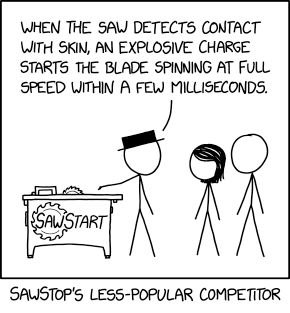
Unfortunately, SawStart is one-use-only. Once started, the blade cannot be stopped, and must be replaced with a fresh blade while the running one is carefully disposed of.
Mon Mar 24 03:37:21 PM +08 2025#7

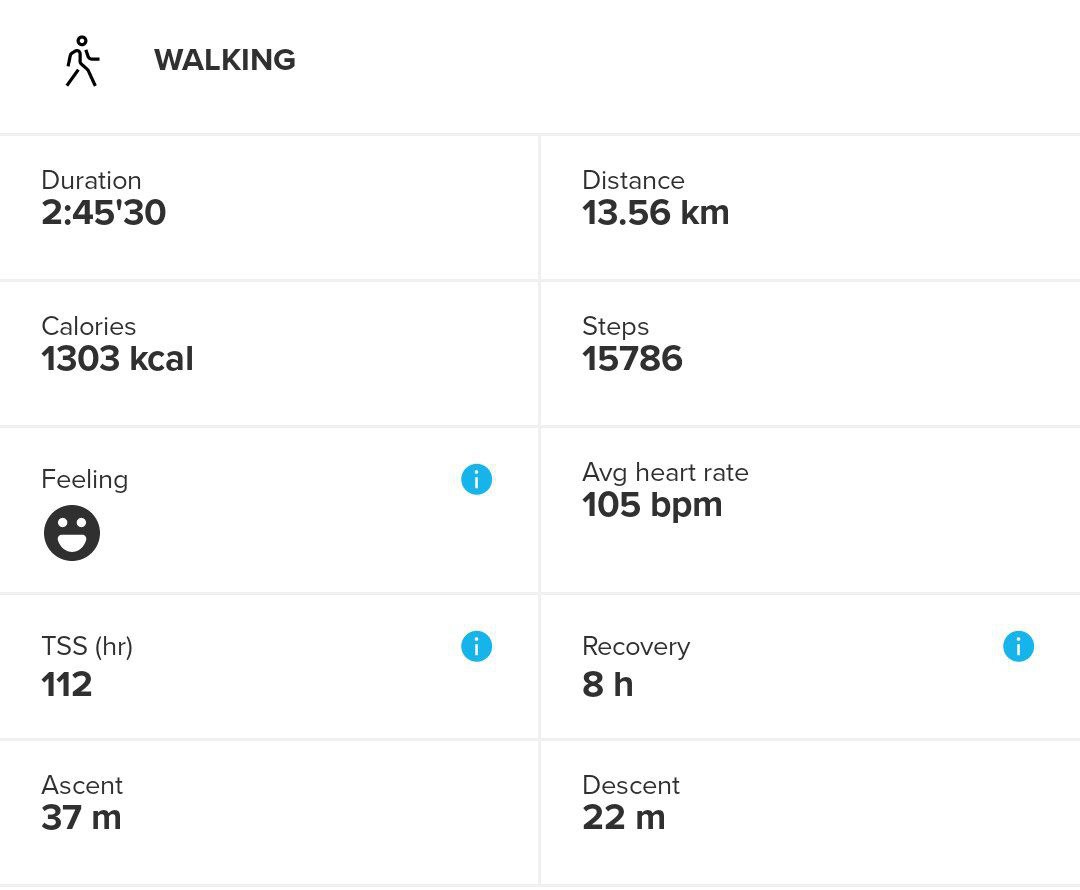
Long Aerobic

Sun Mar 23 11:23:49 PM +08 2025#6

Про это пишет Хэмингуэй в «Празднике, который всегда с тобой»: «Радостно было спускаться по длинным маршам лестницы, сознавая, что ты хорошо поработал. Я всегда работал до тех пор, пока мне не удавалось чего-то добиться, и всегда останавливал работу, уже зная, что должно произойти дальше. Это давало мне разгон на завтра».
Wed Mar 19 02:10:23 PM +08 2025#5

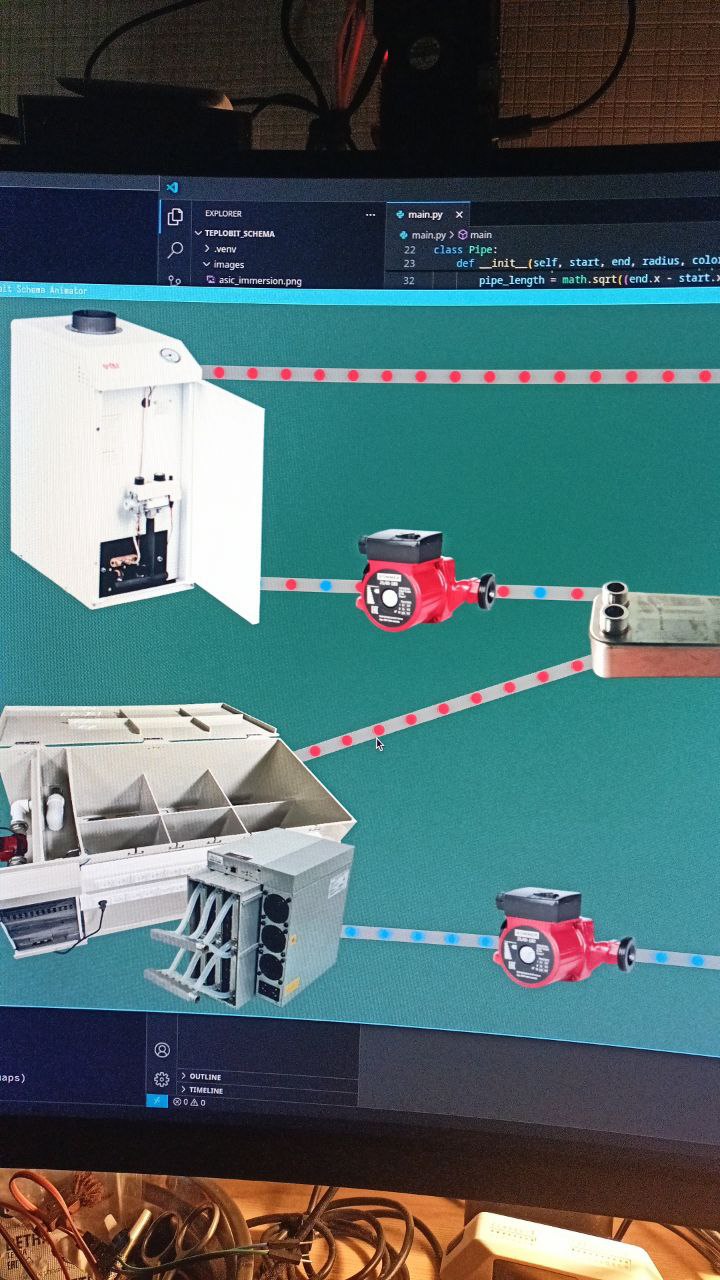
Vibing

Mon Mar 17 03:36:38 PM +08 2025#4

Лайков не будет)

Mon Mar 17 02:35:29 PM +08 2025#3

Хочется, конечно, чтобы здесь было всегда красиво. Но будет, как будет. 😂 И нужно проверить несколько гипотез. https://natureofcode.com/

Mon Mar 17 02:29:39 PM +08 2025#2

Космос наш ждёт

Mon Mar 17 02:16:08 PM +08 2025#1

Пифагорейское